Episode Transcript
[00:00:00] Speaker A: Do you have a podcast that you're passionate about? Are you looking for a professional studio to help bring your vision to life? Then look no further than Crux Media Group Studios. Located at 903 West Evans street in Florence, South Carolina, Crux Media Group Studios is a full service podcast studio that offers recording, editing, consultation, live streaming, video recording and more. We have state of the art equipment and a team of experienced professionals who can help you create a podcast that is professional, polished and engaging. Whether you're a first time podcaster or a seasoned pro, Crux Media Group Studios can help you take your podcast to the next level. Contact us today at 843-407-1673 to learn more about our services and to schedule a consultation.
This episode of Philosophy talk show has been brought to you by Courtney's cupcakery. What's your favorite flavor?
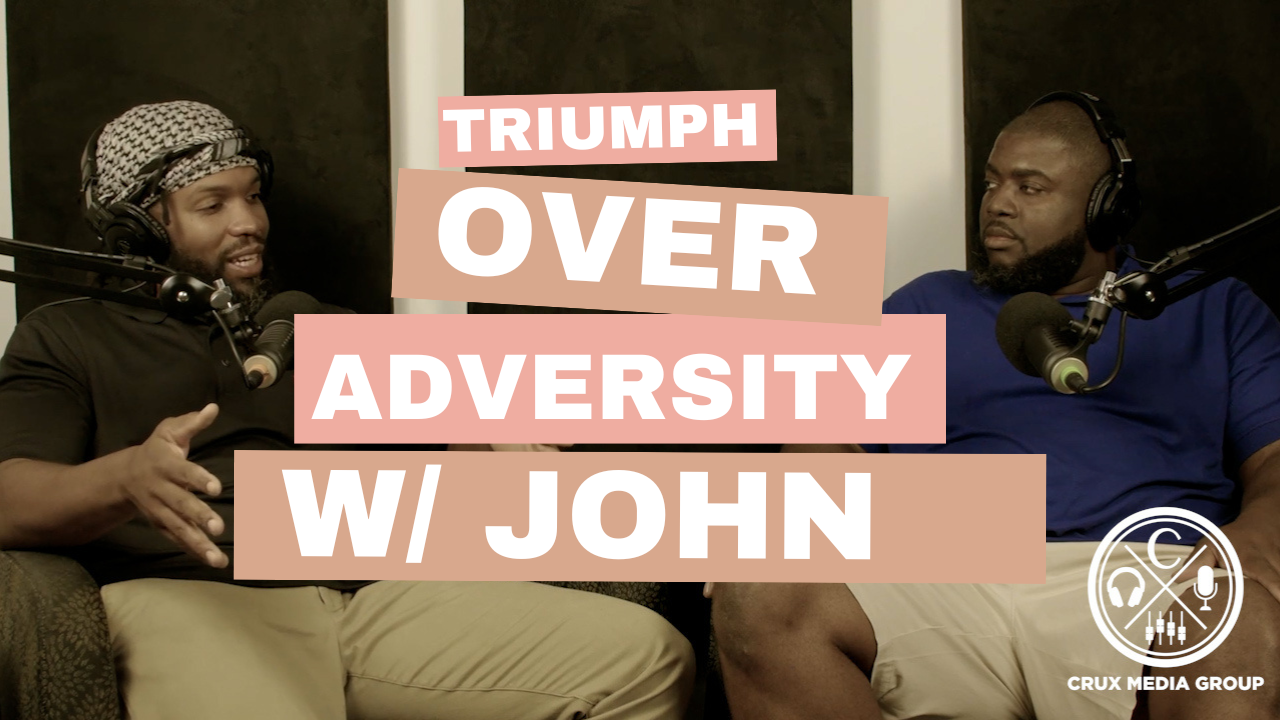
Welcome back to another episode of philosomy talk show. And today is. I know I probably say this every time, but it gets special and more special every episode to me. And this is a, this is an episode, man, where reading the story of the guest today, man, I'm telling you, it made me teary eye, you know? Cause I resonated with it so much. Today I have the pleasure of being with the.
Probably the biggest figure that I know that I could put my hands on in this city.
I have a three time Super bowl championship winner. This guy has held the with the Dallas Cowboys, drafted in 92, 3rd round from Carson Newman.
Even held the long jump record in the state of South Carolina. All American at Carson Newmande. He's been able to live through things that a lot of people give up, give up on in his lifetime. And talking to him this week, he just sounds as if he has.
The title of this show is I once was lost, but now I'm found. All right, I'll say I once was lost, but now I'm found. Because I know at the end of one of the articles I read, the last word was lost, you know? And then the conversations that I've been able to have with you this week has been sounding like you kind of found, you know, what it is that you were looking for. So without further ado, I have Mister Clayton Holmes, the Clayton Holmes in the building on the show today. Welcome to the show, man.
[00:03:00] Speaker B: Thank you, thank you, thank you. This is a blessing.
I saw your show. You did with my son and I like to set up your head and I was like, hey, I'm gonna sit down with this guy. Yeah, I'm glad it's happening.
[00:03:11] Speaker A: Yes, man. Like we said earlier, as soon as you see it, you know, all we gotta do is put it into a little bit of motion, man.
So before we get into where you come from, where are you today, man? Cause I feel like that's important. Where are you today? And, like, what?
What have you been learning about life lately?
[00:03:37] Speaker B: Today I could sum it up as saying I'm at peace when I say I'm truly at peace. I don't have any more wonders about the mistakes that I've made, what I'm supposed to be doing.
I've learned from life, and I understand that life is just this huge lesson. Whether you're winning or you're losing, there's a lesson and all of it. And my mind is open to learn. I'll be 55 in about a week and a half.
[00:04:05] Speaker A: Okay.
[00:04:06] Speaker B: And I know this may sound crazy, but I'm just starting to feel like a man. It's like I'm on the second half of my life, and I'm looking forward to it. I love helping people, especially when it comes to children. I love seeing people succeed, smiles on their face, and I think I have something that can help them if they're in trouble or before they get into trouble. I've been through it and I've learned, and that's what my mission is, is to teach, to help.
[00:04:34] Speaker A: Yeah. Yeah, man.
Like I said, some of the articles that I read, it's like you knew from while you were going through what you were going through, what your mission was. It may not have been clear to you at that time because you couldn't see past not saying that you couldn't, but it's hard to see past the struggle when you in it sometimes. But for you to know, for you to have the same mission at that time that you have today. And I think that article that I read was written in 2008, and you mentioned that that's your mission, man. So. And now that you have that confirmation and you've made it through to this point, man, it's amazing to be able to experience.
So what?
One thing that blows my mind is the fact that you won three Super Bowls. You know, like, it's a large percentage of people that don't even make it to college football.
It's a large percentage of people that don't make it to high school sports. But you've been able to become a perfectionist of the craft by not only making it to the NFL, but winning three Super Bowls. So what was that experience like? Being able to play beside some of the greats that the Troy Aikmans, Michael Irvin, Emmett Smith, yourself, you know, what was that experience like for those who wouldn't know nothing about it?
[00:06:05] Speaker B: As I look back at it now, it was great. And it definitely helped prepare me for off the field, too. Because when you are playing with guys like you, Jimmy Johnson as the head coach, first of all, and just his energy is just amazing. And Michael Irvin, just the guy's workout ethic. And my workout ethic was off the chain, too. And when you get around guys like that, when you around the best. And the chemistry of that team, too, I think chemistry.
You can have a bunch of star athletes, but if the chemistry ain't there with them, it ain't gonna be too much success. But, see, the chemistry was there from the coaches to the strength coach, and just to get around those guys and to realize that, man, there were things I used to do. I thought that I was silly when I was little. Like, for instance, I used to visualize. I'm a visual person. So I remember I'm walking to the kitchen and the refrigerator right there, and I'm making a move to kind of cut around the refrigerator.
We go out with these guys and I'm talking to them about things, and you hear they kind of do the same kind of things. So it made me feel like, okay, I was destined to be here with these cowboys, to be around great people.
Because in all humbleness, that's what I do.
Whatever I'm doing, I'm gonna try to be the best in it. Now, that's good things and bad things, too. But it was that being around those guys, that camaraderie, it just really made me feel that, man, your work ethics are awesome. Whatever it is that you're doing is amazing. But to tell you the truth, when I got drafted, I wasn't really thinking about the Super bowl because, man, you got guys that played 1012 years, they don't get nowhere close to it. So I remember around the end of the season, we make it to the playoffs, they said, okay, we win two games because I think we had the first seed. So we had a buy, like, all right, you win two games, you know, you go into the Super bowl, you know, we win one more game, we going to the Super bowl. Before you know it, we at the Super bowl.
[00:08:11] Speaker A: So y'all won two games?
[00:08:13] Speaker B: Yeah, we had to win two playoff games.
[00:08:15] Speaker A: And it was.
[00:08:16] Speaker B: And then we were in the Super bowl, and it was just. It was amazing. So here's the wake up call, though, okay? I am a person that I've been through transformations. I think you mentioned to me about my first transformation. You read about me hitting that baseball turned into an athlete that day. I remember it. So I'm big on transformation. So I've always said that if I did go play professional football or pro, I automatically thought that, okay, something gonna change about me again. So after we won that first Super bowl, don't get me wrong, it was an amazing feeling, but I remember being on the plane. I was probably one of the first ones to fall asleep, and I woke up, and just about everybody was asleep, and that's when I had my momentous. I woke up. I said. I said, damn, is that it?
Because I was still that same dude. And I've always been living on the edge. I've always had this thing about teetering on, making these huge mistakes. I just. I didn't like who I was, so I thought that if I signed a contract for $1.3 million, I thought the money was going to give me that.
Gonna turn me into a man, right. Or have me happy with myself. The money didn't do it, and then the Super bowl didn't do it. I'm like, damn, man. I'm like, man. So I've been looking for something. Yeah. And to land this plane. What I'm talking about now, I found what I was looking for, and that's just my true self. I've been looking for myself this entire time. And so being a. Being with those guys, it's great being around greatness. It'll pull it out of you. And so if you're ever trying to do anything else in life, you already know what it's gonna take. So that was the come up from getting drafted. And again, whatever people see God as, I feel like it put me in every position that I've been in because I have sincerely cried out. I have sincerely asked why.
And God has shown me. He's shown me everything. It's like, hey, it ain't gonna be beautiful, but you're gonna understand yourself. You're gonna understand life, and you're gonna understand what it is that you're supposed to be doing.
[00:10:36] Speaker A: Yeah, man. One of the things that you mentioned a couple times is finding yourself. I think that's super important. I feel like. I truthfully feel like. And if you disagree with me, cool. But I feel like we were put here to learn more about ourselves, because every day is new, so every day, you should be learning more, especially about you.
So what was some of the ways that you went about trying to find who you are, because that's a challenge for a lot of people. That's something that a lot of people trying to do, but they don't really know, you know, what it's gonna take to get there.
[00:11:17] Speaker B: Okay? So I hope I don't get too deep, and I'm glad you may edit this. Cause I don't have no shame. So I talk about things that I've been through. So when I got in Dallas, I wasn't smoking cannabis. You know, I drank. When I turned 21, you know, I started drinking, wasn't smoking cannabis. But I was about to ask my wife for a divorce one day, I'll never forget, and I'm with a group of guys that smoke. I was like, man, give me that. Give me that joint. So I started smoking, and my contract was over.
I had to go up to the Detroit Lions to work out for them. And I told my agent, I said, hey, Tank. My agent name was Tank blank at the time. I said, hey, Tank. I was just smoking some marijuana. Is that going to be okay? He said, yeah. He said, the only thing they can test you for is steroids. So I go up to Detroit, and I take my test, and they. It came back positive. So the NFL team doctor gave me a call. He said, mister Holmes, there's cannabis in your problems. And I was really naive. I didn't really think that anything was wrong with cannabis, smoking it. So he said, there's cannabis in your system. Can you tell me why? I said, yeah. I said, because I was smoking. He said, okay, where? You're gonna have to go to NAaA. And you gotta talk to the team psychiatrist. So this is when it happened.
Now, when he said, I gotta talk to the psychiatrist, I actually was like, okay, cool. Cause like I said, I always thought something was up. Like, man, I keep getting all this trouble. Da da da da. So I go in there, bro, and he. The first thing he asked me, and again, I'm glad you will probably be able to edit this. This is inappropriate. But he said, have you ever been physically, mentally, or sexually abused? And I said, yeah. He said, well, tell me about it. And, bruh, it was like a big box open. And I was like, oh. I was like, oh, shit. I was like, oh, my God. So long story short, when I walked out of his office, bro, it was like I was in a. I was in a daze. It's amazing how your mind can block things that happened to you. Traumatic. But now he opened the gate, right? So I remember, I walked, I was like, what the hell am I doing in Dallas? It was. I was running.
I enjoyed sports because of that release, but I was running from who? All those things that happened to me. So when he brought all that stuff up, I knew then that, okay, I got to get through this if I'm going to be okay. So that's what started the search. Now, man, I hated my mama, my daddy, my brothers. I was mad at everybody. There's a phase that you go through. So I look at this, too, as I'm going to be able to help people get through it a little quicker. Let's say if it took me ten years, I can help you break it down to four or five. But there's going to be a process of anger, forgiveness, depression. And so that's what started me on the journey, because our students started realizing that, okay, we pick up shyness along the way. We pick up things along the way in life that we get, especially through traumatic experiences that ain't really us. That's not really us. So that's what started me on the journey of, okay, man, I gotta get through this. I gotta be able to look back at my life in a forgiving way. And it took me years to get to that point. But once I got to the point to where I wasn't blaming anybody anymore, and what helped me not blame anymore, because I saw how my dad was treated when he was younger, my mom. I saw the whole chain of events that we keep passing on things to each other. So once I got to that point, it's like, okay, all of these things that I'm carrying around with me, that's not really me, so I gotta get rid of them. So that's when the work started, the self work, learn about meditation. And I think it also helps that I'm a Virgo and I was born in August. I'm just a peaceful, loving person anyway, so I think that helped anyway. But it was all about keeping the things that were beneficial to me and being able to learn to let go of those things that I picked up from life. The stealing, the shyness, not knowing about the importance of family and bringing a child into this earth. All of that stuff, man, it's just, we're just a product of our environment, and we should understand we gotta stop blaming the children so much. We gotta teach em and not just telling them something you can't tell somebody. Like, if, when I got to Dallas at my defensive back, coach said, hey, this is cover three. You go out there, this is how you do cover three. And if he didn't explain it to me. And if he didn't put me through drills to help me understand the play, then we wouldn't have been good if you just would have said, hey, this is cover three, and this is what you do on cover three. And there wasn't no teaching. So we're used to telling people something, but we gotta learn how to teach and to put them through things. So that's what got me to the point of understanding the work that I have to do on myself to get better.
[00:16:28] Speaker A: Yeah. So going through all of that Mandev, getting to Dallas, going through having that enlightened moment with the team psychiatrist.
So your story from that point going on, you had some low lows.
[00:16:43] Speaker B: Yes.
[00:16:44] Speaker A: All right, so can you tell us about some of the low lows? Because I know they say one of the hardest things to endure is having it all and losing it all, you know?
Did you find that as factual in your okay?
[00:17:01] Speaker B: No, I think one of the lowest for me. So it was good for me not to have anything then to get it, then to lose it all. So it was cool. But you know what the most disappointing thing about all of this to me was? Relationships. Like the children of my mom. I think that's the thing that hurt me the most. Now, again, I'm not on here to blast anybody. If I talk about things from my past and relationships is to help that next athlete or is to help that next woman that's planning something that ain't. But that's the one thing that really took me into a spin, is thanking somebody like, love you and care for you, and they're going to be there for you, and you find out that they wasn't, that was the most difficult thing as not losing it all, but seeing why I lost it and not having that support from people that you took care of, and not just the girls, but family. That's the most thing that hurt the most for me. It's almost like, and it's true, and God bless their hearts, they didn't know it. But this is why I tell people, like, spells and saying negative things about people. I don't care if you're across the country. It affects people. Like to know that people waiting for you to fail, like, oh, he gon fuck it up or he gonna mess it up. And so we don't know, at times we put curses on our children.
You ain't gonna be shit your dumb ass. I guarantee you. If you ask any father or mother who talk like that to their child, ask them, what's your child doing today. Now, again, this ain't to put nobody on blast. We gotta be careful. But just, and I'm a sensitive person, so the sense that people were really waiting for me to fail, I think that played a role in it also. So that was the biggest thing.
The biggest disappointment for me is getting over that hump and working through that with forgiveness.
[00:19:11] Speaker A: That has to be so accepting. You feel like acceptance plays a huge part in that as well.
[00:19:16] Speaker B: Yes, accepting it. And it took me years to get over, to get over that because I know that they don't know better. This is just how things are. And you mentioned something earlier when I was talking to you.
The first time I ever got, like, congratulated or somebody cheered me on, man, those things are crucial for a child, especially if you getting on them. Praise is something amazing, especially if it comes from a loved one. That kind of praise, I think it'll make a child want more of that. Like, oh, man, I want my mom and my dad to be that, oh, I love you. And that was good. I want more of that than always getting in trouble. Fang and I finally got a chance to experience that and I wanted more of it. So it was difficult losing it, but I think what was more difficult is understanding why I lost it and not having that support. Just that support. You gonna be okay, baby. We still got your back. But no, it wasn't like that. And again, bless them. I ain't mad at them, but, yeah, those are the things that we need to understand.
[00:20:21] Speaker A: One of the things that I resonated heavily with in reading about you was, and I said it earlier, was being willing to help everybody or anybody. And then, you know, when the help runs out and you don't have and nobody can help you or they didn't appreciate it as much or they disappear, you know, that was one of, that's one of the things that I feel a good bit of people probably have to endure, too. And the fact that you being able to live through that, like, how would you get someone to, how would you assist someone in working through being too open handed and, you know, digging a hole for themselves?
Pretty much. Like, what would be your suggestion or advice on helping somebody work through that if they're going through that now and.
[00:21:16] Speaker B: Especially if it's a child and they're an athlete and they sign a big contract.
If somebody would have mentioned this to me, like, hey, you, 21 years old now, being able to play ten years in the NFL or any sports, that's a reach. So I think, like three years is the average or 2.5 years is the average. But if you set a goal like, okay, I'm 21 now, I can retire at 31 years old and have a lot of money to start a family, to get the really big house and the car. But see, they implant all this stuff in our minds when you coming from the hood and you ain't never had no money, you want the car, you want all this stuff and it's just a big setup. And if you realize that, hey, let me focus on my job right now. I have a job and it's gonna be a short career. I mean, where I can put ten years in, five to ten years in. And if you get vested in the NFL, man, that is one amazing company to be vested in because there's so much stuff that I'm still finding out to this day. If you want to start a business, go back to college, there's all this help for us to do things. So.
And I applaud some people that know how to pinch a penny and say, no, that was my biggest thing. I was too generous to people that I knew wasn't going to do things that they say they were going to do. So my thing is you put your focus on you, you help your, you know, the people that are there for you. But this is being a professional athlete. It's short and you don't want to get caught up in all that living like the Jones and stuff. At first you just want to because you don't know if you're going to be in Dallas next year and you might get traded to DC the following couple years. So you put your focus on your craft and then after that, then you go get your house, your cardinal. But yeah, you gotta learn how to have, I don't wanna say a heavy hand or a hard heart, but you gotta know how to understand that that money can go quick.
[00:23:25] Speaker A: What was your first big purchase after your 1.3 million? You coming from nothing, you know, and then you signed a contract for $1.3 million in 96. Was it 92?
[00:23:38] Speaker B: 92.
[00:23:38] Speaker A: 92. You know, what was your first, when you seen those digits, what were your thoughts, man? And then what was your biggest purchase, your first big purchase?
[00:23:50] Speaker B: My first big purchase, I guess you could say I got the house for my mom. I got my mom a house over in East Florence and I think I got an Acura legend. But my first big purchase was I got a mercedes a 560 sec.
That was, that was my biggest one. But I signed a contract and they didn't know it at the time. But I had an agent and all of my checks went to him. But that first check, it came to me. We got paid every two weeks. And I saw them numbers, I was just like, man, I'm getting this every two weeks. It was just unbelievable, man.
[00:24:24] Speaker A: It was unbelievable. I know it was.
[00:24:28] Speaker B: But when you grow up like me and say, I always had a problem with disrespecting money. Cause I grew up stealing and I couldn't go. If I went home and I had a bunch of money in my pocket, then they go, no. So I got used to early just giving money away and spending. I didn't respect money. I didn't respect it at all. So that's why this last.
I don't wanna say last, man. Ever since football's been over, I've been living real humble. Like, money hasn't been my biggest concern, nothing like that. Because I realized that I had an issue with it. I didn't respect it. So I had to learn what I'm saying to you now about, okay, why do I have this problem with money? I gotta learn to respect money. Stop tipping. I'm one of them people that I'm big tipping and all this other stuff, man. No, I used to laugh at guys. There's a guy on our team named Larry Brown who was tight with his money. And now I look back at it now, it's like, yeah, but it can mess with your ego. You know, getting that money, when there's something saying, it's the root of all evil. Biggie said, more money, more problems. So you gotta be careful and humble yourself to it. And that's what I've been doing over the years. So now I'm ready to go get the millions that waiting for it.
I got more respect for it now. You know, being older plays a part in it, but that's what it was for me, is just being able to respect it more.
[00:25:51] Speaker A: Right?
They say money don't change you.
If you don't change, when you get the money, you will be back in the same place that you were in or even because you on that same vibration, you know, you gotta really be vibing at a place to where, you know, the universe can you attract that, you know?
[00:26:11] Speaker B: And I tell people too, and the kids that I talked to, I said, hey, and for everyone else too, it's like, don't want the money first, don't think that getting the money is going to make everything great, because whatever it is that you like, the money is going to intensify. If you like drinking, if you like gammon, whatever it is you like, money is about to intensify. So get your mind right first and then let that money come in, because I don't care who you are, mandev, it's going to do a little something to you unless you kind of grew up with it and you're around people that teach you to respect it. But nowadays, man, it teaches you to have that little swagger and think this.
[00:26:50] Speaker A: And, yeah, lifestyle marketing, you got to look like it. So, okay. One of the things that I found, I wanted to know, one of the articles said that, you know, you looked at the things that you gave your jerseys away. Travis Hunter.
Is it a Travis hunter?
[00:27:07] Speaker B: Yeah, that's my cousin, the author. Yeah, he went to Wilson. He's in Atlanta now. He writes the book. Travis Hunter.
[00:27:12] Speaker A: Oh, wait. I think I got a picture with him. Yeah. So, but you say you gave your jerseys to him because you just saw them as things that you acquired while doing what you desired to do. You didn't have much value behind it. But your Super bowl rings. You pawned the Super bowl rings. What was that moment? All three of them.
[00:27:38] Speaker B: All three of them.
[00:27:38] Speaker A: What was that moment like when you made the decision to pawn your Super bowl? Did you pawn them in Florence?
[00:27:44] Speaker B: No, Dallas. Two of them in Dallas, and the other one was in Kansas.
But that was, there was shame with that. And there was also, I don't care anymore. Like, I wasn't, I didn't feel worthy. I was embarrassed about the things that I've done. But see, here's the cool thing about me pawning the rings. When I got to, we're meeting, I met this guy named Al Rooker and Tim Carson, and I told them that I, you know, I got rid of my rings. They invited me to dinner. And this Tim Carson guy, I met him when I got to Wenanche. And the day that I met him, I was in Wenatchee for three days. I was just into my speed and agility training. And I told the guy, do this. He goes, oh, I got this gym. He said, if you want to use upstairs for the training, you can. I was like, what? So I went and checked the gym out, man. Within a day, I'd already had my business set up. It was just magical when I was there. So I didn't know at the time, but I told him I got rid of my Super bowl ring, man. Two years later, about a year and a half, two years later, he invited me back to dinner, and he put the box on the table, and it was the box that my Super bowl ring came in and I was like, no, he found one of my Super bowl rings. Six months later he found another one. So I got two of them back. What? I got two of them already, bro.
[00:29:11] Speaker A: That's what.
[00:29:15] Speaker B: We'Re looking for, that last one. And I honestly think that some, when I really started doing my thing with the podcast books, that somebody, whoever has that ring, they're going to want it. They're going to want me to have it back. But I got them back, bro.
[00:29:29] Speaker A: If you have this ring, what year is the one that you. What year is that?
[00:29:33] Speaker B: The 93 94 ring. I don't have, but the 92 93. The 94 95, I got those back.
[00:29:39] Speaker A: All right, so if you see this on ESPN or something, they clip this part out. If you have the 92 93 ring, the 93.949 394 Super bowl ring for Clayton Holmes, please send us an email, contact us and let's see what we can line up, man. Cause that'll be, that's crazy.
[00:30:00] Speaker B: That, yeah, but that hurt. It hurt and I did. I just. Yeah, that was a terrible time. And then my dad had one of them, I gave one of them to my dad and I had to, and I called him to get that ring back from him. That was probably most, the hardest one is getting the one back from my dad that I gave to him. He had the first one, the 92 to 93. But yeah, man, I was at my low low. I was at my low low.
[00:30:24] Speaker A: So, so what, what does a Super bowl ring, what is it worth at a pawnshop?
[00:30:29] Speaker B: I probably got 12,000 for that first one, about 14 for that second one. But it all depends on the name that's on it too.
[00:30:41] Speaker A: Oh, really?
[00:30:42] Speaker B: Imagine if Emmett Smith was to get rid of his ring. So it has a certain value, but your name gives it a little more value.
[00:30:50] Speaker A: I can see that too, man.
That's amazing. That just turned back. I wonder how you said Tony Carson, he was bringing you to lunch, right?
[00:31:05] Speaker B: His name is Tim Carson.
[00:31:06] Speaker A: Tim Carson, friend of mine.
[00:31:06] Speaker B: He has a big business guy in Wenanche and I told him I got rid of my rings and that whole time he's trying to find them.
[00:31:12] Speaker A: That's amazing. That's amazing.
I'm happy for you. You ever wear them?
[00:31:18] Speaker B: I do. They're actually in a. We got them in a safe deposit box and ship it every now and then. I'll put them on.
[00:31:24] Speaker A: Man. That's amazing, man. Whenever you get back to them, man, I love to have a picture of it just to actually see for sure. See a super. Cause I never seen her Super bowl ring. For real? And you want three of them? I never seen a ring. You won three. Like, that's. That's crazy. Yeah. So, so tell me. Tell us about, like, what's on your mind. You know what I'm saying? Like, we have the back story. We have some of your story.
But what's on your mind now, though? Like what going from the point that you are now. I know you said helping people. You know what. What you thinking?
[00:31:59] Speaker B: What's on my mind now is how difficult it is for me to do what I'm attempting to do, because it causes people to, like, look at themselves. Me being back home confirmed everything that I'm thinking. And it starts with these children and us setting a good example for them, because, again, they learn more from what we're doing and not what we're saying. We can tell a kid not to smoke marijuana, not to do this, but if we're doing things around them, we don't know, we're not aware of the impact. So this is a difficult job that I have to do, explaining to people what the problem truly is.
We can beat around the bush to a lot of things, but I like to, like, get to the root of the issue. And this whole thing is. And society doesn't allow people to do what I've done. See, I was able to live humbly and get out of the rat race and find myself. And that's the other thing that I'm like, okay, Clay, man, these people, they got children. Two people gotta work. I mean, I guess you could say, like in a cave, man, I was truly doing some soul searching. And a lot of people can't spend that time, like at that quiet time, doing the stuff that I've done. So I'm realizing that, too. But there is a way for people to get it done. So that's what I'm doing now, is I wanna show people how I got to this place of peace. I wanna show y'all what I've been doing over ever since 2004.
I guess 2004 was when I really started, because that's when I got into.
[00:33:44] Speaker A: Like, meditation 20 years in, man.
[00:33:46] Speaker B: Yes, yes. And my cousin pulled out that book and I was telling him about some of the meditations I do, the simple ones, like breathing. I was like, cuz I've been working on this for 20 years now.
[00:33:58] Speaker A: 20 years.
[00:33:59] Speaker B: I'm talking about 20 years. I've been working on certain meditations. And I'm seeing how they've. How they've helped me. So I had this game plan, and now it's time for me to share it. And at the same time, I'm still aware that I'm gonna get some people upset, not because I'm telling them anything wrong, but some people just don't like being put on the spot or for you to explain something that they're doing wrong. Like hell you think you are. That kind of attitude kind of deal. And so I've been preparing myself for that. And the one thing that I've learned and that I'm going to express from my podcast, I hate when there's some type of debate going on and somebody is trying to give someone else some knowledge and they're making them feel stupid. It's bad enough to ought to be wrong about something, and very rarely were you gonna see somebody go, dang, man, you know what? Thank you for that. And that's the other thing about us, too. We're always taught to defend whatever it is that we're debating about and not fessing up and going, okay, man, you know what? I was wrong about that. You right. That's something that we need to learn how to do, is to give it up when somebody corrects us or be able to stand corrected. But people get offended when you hit them with something, man. They think he is that kind of thing. So that's the kind of stuff that we got to get rid of and grow.
[00:35:24] Speaker A: Growth is uncomfortable, and I feel like that's what it is. It's hard to be held accountable.
I mean, growth is not. It doesn't feel good. Like, it's not a feel good feeling until you've reached a point where you can look back. That's what I've learned. Cause I can.
Self personal development is a passion of mine, like I said earlier. So everything you saying, I see it and I completely understand exactly what it is that you're going to accomplish. And it is going to be some people that I posted one time, like your story is going incriminate some people. So sometimes when you tell your story, some people that still gonna feel some sort of way just because now you're expressing it.
And it's hard to work through sometimes.
[00:36:14] Speaker B: Yeah, you know, so I've learned. Okay, Clayton, there are gonna be some things that you're gonna say. So you try and be as peaceful as possible. Don't ever make nobody feel stupid no more when you're trying to explain something to them, because it's already going to hurt them. So that's my thing. And being here man, it really put me to the test. I've been talking all this trash about who I am. I ain't gonna be doing no arguing. And I've been put in a situation. And I used to argue with people because I wasn't really quite sure of myself. And to say the truth, it was like practice. I was learning the game. But now I know when to let things go.
Okay, Clayton, you just said something to touch this person. Now, don't let that person turn this into no argument. You just leave this alone and you keep doing what you're doing. Now, this may sound arrogant, but this whole.
The Christ story, the Jesus story, it reminds me of what I'm up against. Like, okay, when you stand up for love and peace, for all, this is exactly what you gonna go through. They're gonna hate you. They're gonna be calling you names. They're gonna be doing all this stuff to you. But you keep your head up and you keep doing this love work, man. You keep doing this work. And that's what I'm gonna do. Because there's so many people that wanna change because I was there. I'm still. Again, I'm not sitting here like I'm perfect. I will have my moments. And a lot of people, we know what to do, but then we fire off at our kids or we do something that we don't want to do, and we know that we're not supposed to be doing it, but that's where the practice comes in. It's like, okay, man, I ain't gonna beat myself up. I had a little slip, but it's practice. I got a habit. And habits are hard to break. And the best way to break a habit is to start another habit in its place. That's the best way to get rid of a habit. Don't be too hard on yourself. But we all know the things that we need to work on, but we're not working on them. We may consciously control it sometimes, but eventually, if we ain't putting in that practice, if we ain't running drills, if I'm not constantly thinking about breathing, or I need to respond this way, or when I get done with a conversation, damn. And this is something else I'm good at, too.
And it depends on the person. Cause some people don't. Some people don't know how to accept an apology.
[00:38:41] Speaker A: Accept an apology.
[00:38:42] Speaker B: Except you should apologize. You're damn right they don't know how to. So I've learned how to. Like, if I like, man, I need to call so and so. Back and say, yeah, you know what? That was my bad. Cause even to this day, I love to sit when I'm wrong about something. And that's the other thing. It used to make me feel some kind of way when I'm wrong about something. But now, man, I quickly like, my bad.
[00:39:09] Speaker A: That's good.
[00:39:10] Speaker B: Now, depending on how deep it is, I still may feel like I got punched in the gut sometime. It may take me a minute, but I'm eventually like, hey, you know what? I was wrong about that. My bad. I'm sorry. And it hurts. It stings. So if I remember how that is for me, it helps me understand people. But I'm quick now to humble myself, because all I want is knowledge. It gets me closer to whatever God is, especially when I'm talking about something deep. So that's the first thing that I think about. Now, you wasn't wrong. You just learned something. So every time I'm incorrect about something, it's like, oh, I just learned something. So when you put it like that.
[00:39:45] Speaker A: Perspective, man, that makes sense, though.
You able to kind of, like, shift the reality of what's going on in front of you just by your perspective of it. That's pretty dope, man. So you feel like one of the things that you used to do was try to convince others to think the way that you were thinking instead of giving them the liberty of thinking what they think.
[00:40:07] Speaker B: That's it. I kept egging it, I kept pushing it, and then my tone wasn't helping either. Because once you get to this tone with people, I ain't never been in a conversation with somebody, and after that, they go, man, thank you so much, Clayton, for that. It always is negative. Stop doing that, man. Stop doing it because you gonna end up with the same results. And when I've. And I always sense when a conversation is about to go sideways, so it's like, okay, this conversation about to go sideways. And the best thing that you can do is don't turn into an argument because they're gonna forget the thing that got them upset. But if you can leave it alone, that person gonna have some quiet time, and they gonna reflect and be like, damn. Okay, all right. Damn, Clay. All he did was say this. And especially if it's a person that's a thinker, too. So I've learned to just not get into all of that. This because nothing good comes of it. Nothing.
[00:41:05] Speaker A: So how do you get.
How do you get past overthinking? Because being a thinker, sometimes, like I always say, you only an overthinker until you write, then you're a genius, you know? But. So how do you get over the overthinking or the holding on to the being right? Or I had to convince them too long, you know what I'm saying? Or dwelling on this conversation so a long time afterward. Cause I think sometimes time makes it hard to go back and apologize. You know, it's been like, manda, that was, like, two weeks ago. Like, should I reach out to them? Is it gonna seem weird or how they thinking or. So how do you manage the overthinking part of going into detail and self reflecting?
[00:41:54] Speaker B: I realize that overthinking. Overthinking is a process. I mean, it's part of it, and you just have to be aware of it when you're pushing too much or if I'm overthinking. But I think that just. It comes with it. And you just have to know how to humble yourself, make sure you're not repeating the same thing over and over again to a person or again.
And I'm trying to think of a situation where I overthink something, but I just. I realize it, and then that's when it comes to, okay, just relax and just breathe in and don't. And don't overthink it. Just make sure that your best interest is for everybody. And the whole thing about apologizing to, like, there's some people that I know, like, you can't apologize to, but as long as you can make that conscious decision that, you know, I was wrong to that person, because, like I said, some people really don't know how to say sincerely, man, my bad. I apologize. I'm sorry about that, because it makes you. It makes you. You ever seen that movie major pain, where the little dude, he ran up to Major Payne, he gave him a hug. He said, oh, I love you, Major Payne. And he turned around and put him in the fool of Nelson. And the lady stopped him, and she said, oh. She said, no, he was just showing you some affection. He goes, ugh, make me feel funny. Some people don't really know how to accept someone saying they're sorry to you. You know what? You should have said, you sorry.
So, with me knowing that, it's like, okay, as long as I can admit to myself that I need to say I'm sorry to this person, and then the people that I can say it to. And it was tough for me. I'm not saying I was always used to saying, you know, my bad. It hurt because the one thing, too, that I think affects us and why we can't admit when we're wrong.
I'm pretty sure this happened to a lot of people. Whenever you're wrong about something, ah, how they laugh at you and you stupid. So whenever you're wrong, instead of saying you're sorry, you go back to feeling that feeling of people laughing at you and feeling stupid. So that makes it hard to just admit that you're sorry. So I went through all of that, and then I was saying sorry the wrong way. But now I can sincerely say it because I've been practicing this, because that's what I want people to be able to come to me. It's the simple things in some things in the Bible that we need to pay attention to, like learning to speak to people, how I want people to speak to me, just those simple things like that. That's what I've been practicing. That's what I've been doing. And it's been hard. It's been hard to suck it up and go in here and say, I'm sorry, you know what, and mean it, too. So. And again, I wasn't good at it, but I'm good at it now. And this is the kind of practice, this is the stuff that we need to implement into our lives. We gotta put in that practice and that quiet time with ourself and that quiet time with God. Just that quiet time. Just breathing, not thinking, not praying, just breathing, man. And relaxing, man.
[00:45:05] Speaker A: It sounds like you reached the tip of Maslow's hierarchy of needs, which is self actualization. You know, like, that's the tip of that. They say that's the tip of it. At the bottom, you have, like, food and water and then security and in your social life. But the tip of it is self actualization. And sitting here listening to you, man, it just sounds like you've really set and dissected the things that you've been through, the way that you've reacted to certain things, and put yourself in a position to be more proactive as far as what it is that you, you let out.
And it sounds like, correct me if I'm wrong, this was probably one of the biggest challenges since you've been practicing your self awareness. I'm coming home. And your practice has been working.
You getting another Super bowl ring. It sounds.
[00:46:08] Speaker B: I got me one more coming.
Me coming home. This was a perfect time for me to put everything in the practice that I've been doing. I've tried.
[00:46:17] Speaker A: That's what's up, man.
[00:46:19] Speaker B: My cousin brought that book out it was the secret. Yeah. Called the Book of Secrets.
[00:46:23] Speaker A: The Book of Secrets, yes.
[00:46:25] Speaker B: And then I've also. I grew up in church. We grew up in holiness church. We went to church Sunday, Monday, Wednesday, Friday. And I'm in them churches, they catch the Holy Ghost. We talking about jumping around. So I used to always wonder, when am I going to have my little Holy Ghost moment? There's sometimes in church where something happened. I'm about to jump up and just like, no. Again, it was more like the music and just like, no, but long story short, I finally.
It is so amazing when you realize self, because with self also come like God. So I had this aha. Moment. I got hit by a car in 2015. I got this mark on the middle of my head because I finally had my holy Ghost moment, that self actualization, that moment of, oh, my God, and.
[00:47:18] Speaker A: You got hit by a car.
[00:47:19] Speaker B: Oh, yeah.
[00:47:20] Speaker A: So when you had that moment, you got hit by a car.
[00:47:23] Speaker B: Well, that meditation book I was telling you about. And there's this other. This thing called auditing.
I've looked into every religion and Scientology. I'm not a Scientologist. I don't promote it, but there's good things in every religion. And there's this thing with Scientology called auditing.
[00:47:43] Speaker A: Auditing.
[00:47:44] Speaker B: And this is one that you can do for yourself. It's like, you think of the last time that you were happy. Like you laughed, like you were happy. I don't care if that was five minutes ago or hour ago. Think of that last time. So when you find that time, you want to find a later time, like a time last week. So the goal is, you're trying to find the very first time that you were, like, happy, excited. So that led me to that baseball thing that I'm talking about now. Imagine sitting down for 30 minutes and you going back through your life, and you're just trying to find these amazing moments. Can you imagine how good you gonna feel when you walk out the door or you do something? Cause you thinking about good things all day. And it led me back to my most memorable moment. Now, there's another auditing that you do that you're not supposed to do by yourself. You gotta have somebody with you, because what you're doing is you're putting yourself back in that situation.
So you shouldn't be auditing a traumatic experience, because what you're trying to do is put yourself right back through that situation. So what you do is you think about the situation, and you try to remember as much as you can. And when you can't remember anything anymore, you get stuck. Then you start over from the beginning. So you start over, and then you, then you pick something else up. And then once you can't remember no more, you start over again. So it's like you're putting yourself in a little trance.
[00:49:07] Speaker A: Yeah.
[00:49:08] Speaker B: And so I did a couple things that I wasn't supposed to do, and there was this breathing thing that I did and I didn't. And I know why ushers are in the church now, because, you know, they help people not fall down, trip over things. So when you have that moment, and this is something else, the whole God thing is serious to me. I'm talking about a personal relationship. And then when you develop that personal relationship and you feel that God is with you, you ain't finna sit still, not go through some kind of motion, brother.
[00:49:41] Speaker A: Yeah, yeah.
[00:49:42] Speaker B: You gonna have a hallelujah moment.
And I had my hallelujah.
[00:49:49] Speaker A: That's what's up. Yeah. Another transformation.
[00:49:51] Speaker B: That's it. That's it. Another transformation. I saw who I was, and it was like, let's say my whole life, every experience, it was just this big group of things. And then all of a sudden, man, everything lined up. I see everything.
[00:50:08] Speaker A: That's what's up. That's dope.
[00:50:10] Speaker B: I was like, oh, I seen everything. That made me good. I seen all of it. And then now I see the work that I have to do to get back to my original self. That being that I was before.
When we came out of the womb, that was the most traumatic event in our life. Cause for nine months we was in this place, we didn't need no oxygen to breathe. Was getting our oxygen through our mom. And we was with God then. And then we come out and we take that breath, and there's a meditation that I'm going to. I'm glad I got that book because. And my mom can't remember, so I'm trying to remember, like, the exact time that I was born. Since I know about meditation, I want to sit. Like that time, like before I took that breath and just. I think that's special. Yeah. So when we took that breath, man, that's when we lost ourselves. And I think this whole thing is life is for us to truly find our true self.
[00:51:10] Speaker A: Yeah, our true self.
[00:51:12] Speaker B: We gonna pick up things along this earth, and we all like parrots and copycats. Everybody got somebody that they wanna be like, but nobody ain't. Excuse me, teaching them. Hey, nah. The goal is to be you. It's okay to see a guy named Emmett. And you wanna pick up some things from him, but you don't wanna be him. His whole goal is figuring out who you are. That's what this whole thing is. But we so caught up in wanting to be like somebody else. But this whole thing is, man, we. Little G's.
[00:51:39] Speaker A: Yeah. For real. With a lowercase g. That's it. Yeah, I definitely.
I definitely feel you, man.
It's amazing. And when you being yourself, that's what makes you more valuable. Because if you being somebody else, now it's two of them.
[00:51:57] Speaker B: That's right.
[00:51:57] Speaker A: You know what I'm saying?
If it's too, too much, the value decreases. Scarcity increases the value. So if it's one of us, and we can be us to the fullest, then we can value ourselves, man. So what's one? Okay, so if you have one message to leave on this earth before you transition, what would that message be?
[00:52:21] Speaker B: Work on yourself.
That would be. The one message that I would leave is working on yourself. Finding that peace in yourself and being able to let things go that don't serve us, that we know is hindering us from becoming great. And that is about working on yourself. Being able to get to a point to where you can look at your life and see things that you've picked up and let them go. Because I don't think there's anything more beautiful when a person truly finds who they are. There's nothing that nobody. Cause this is my goal for my grandkids. I wish I felt like this when I was twelve. Can't nobody say nothing to me that's gonna make me feel shame or embarrassment. There ain't nothing that I can do.
[00:53:07] Speaker A: That's power right there that's gonna make.
[00:53:08] Speaker B: Me feel shame or embarrassment.
[00:53:10] Speaker A: That's power.
[00:53:12] Speaker B: Yeah, man. Just everything is a lesson.
And that has registered with me now. I don't stay down about nothing too long. Nothing I don't go into. Like if somebody in my family leave, of course I'm gonna feel sadness. There's situation that depression may come on, but we're taught to go into the depression to go into it and not understand it. Get in and pull myself out of it and look for the lesson in everything, right? Look for the lesson and work on yourself. Because you'll be amazed when you truly find out how special you are.
[00:53:50] Speaker A: Yeah.
[00:53:51] Speaker B: Yeah, man, we all are special and great. But unfortunately, we go through things that we think we're less than or I'm hood. And it's just. No, man, we so much more.
[00:54:02] Speaker A: So much more would you suggest people get out of their environment they grew up in?
[00:54:09] Speaker B: I would suggest when you get to a point where you can travel and experience new things, I would definitely suggest doing that, because I can imagine if I didn't go to college for real, I would be dead or in jail. There ain't no question in my mind going off to college, experiencing how other people do things. Like, dang, man, they wouldn't handle this this way at my. Where I'm from. So it's a whole. It's a whole nother world out there, earth out there. So it's good to get away from home and not. And some people leave, and even to this day, a lot of professional athletes, they don't come back. And there's reasons for that. But you want to leave, but you want to come back. And especially if you see that there's some things that aren't quite right, that's what I want to come back for. I want to help. I want to help these children hold onto it a little longer than I did. Help them understand what they're going through. And right now, bruh, it is tough right now, because I graduated in 1988, and that's when the gangster rap really started. Like, NWA came out in what, in 89 or 90 or something like that.
[00:55:13] Speaker A: I was born in 88, so we.
[00:55:15] Speaker B: Had two live crews, so the music wasn't as bad as it is now. And we don't. A lot of people really don't understand what that does to the subconscious mind, man. For real, what these kids are listening to nowadays and what I. This sexting that they doing sending, man, is. And Hollywood knows this, man. That's the other thing that hurts for a person like me. It's for like, the powers that be know what they doing when they messing with the mind. And this music and the tv stuff that's going on. Like, I grew up watching things like the Brady Bunch and Waltons, these wholesome families. Now you turn on the tv, the children slamming the door, and their mama face and their daddy face, and they talking crazy to them. They wonder why the kids talking crazy to us, right?
[00:56:01] Speaker A: Yeah, right, man.
[00:56:04] Speaker B: So it's just a whole. That's the stuff that we gotta be aware of and change and get us back to where we were, man. We were the original people on this earth, and now we at the bottom of the totem pole. And it's just sad what they've done to us as a people, too. But we gotta recognize this and wake up.
[00:56:22] Speaker A: Yeah.
[00:56:22] Speaker B: Yeah, we something special, man. We're amazing.
[00:56:24] Speaker A: For sure. For sure, man. I wanna thank you. I wanna thank you sincerely for your time, man. I know this is. You stated earlier, this is something that you don't too often get about your conversations, but every single conversation that I've been able to have with you has been, like, gratifying, you know, including this one. I wanna thank you. Cause it's something that you didn't have to do, you know?
I think you leave in town tomorrow.
[00:56:51] Speaker B: I leave Thursday, 11:32 p.m. thursday.
[00:56:54] Speaker A: Thursday. Headed back on the train. You know, you got some time to yourself to reflect, you know? So I look forward to that journey for you. Cause that's gonna be an entire journey. But I genuinely appreciate the opportunity to sit down and speak with someone of your stature. You know, I feel like the value of the show just went up a little bit more having you here, man. So thank you so much.
[00:57:25] Speaker B: I appreciate that. And I just want to give a shout out to my dad. Me and my dad, the relationship, it wasn't. It wasn't. Our relationship wasn't great. I think a lot of people know that, but, man. And the older you get, the harder it is to change. But I am so impressed with my dad. And again, this may sound crazy, but I feel like a man when I'm with my dad now, man, that's a sub. And I think whenever you come home, if you've been away from home, I think everybody kind of had that feeling, like a child kind of thing anyway. But mine was really deep. But for the first time, man, there ain't no, no. What's the word I'm looking for?
Like, negative energy. The vibe is good. I'm not saying that we all on the same page about everything, man, but I want to give a shout out for my dad, for him making the changes that he's made and still doing the things that he's doing at my mom, too. I've had a wonderful experience with my family. And this is the very first time when I say this is the very first time that it ain't no, like, negative or I feel like that little shy, scared little kid again. This was beautiful.
[00:58:35] Speaker A: That's for sure.
[00:58:35] Speaker B: This was absolutely beautiful. And I look forward to coming back. I look forward to doing this with you again.
[00:58:40] Speaker A: For sure, man. For sure.
[00:58:42] Speaker B: Cause I got some things I'm gonna do, bro. This is just the beginning.
[00:58:44] Speaker A: Yeah. And if it's, man, I'm a phone call away. If it's anything that I can. Any thoughts or research that I could do to assist you in your journey going forward, man, we connected. Now we cross paths in a major way, so I'll be more than happy to assist.
[00:59:01] Speaker B: I like what you're doing. I like your energy, man. This is you, man. You like what you're doing.
[00:59:06] Speaker A: Thank you.
[00:59:07] Speaker B: I'm looking forward to really leaving my mark here in Florence.
I'm going to leave something special on this to help people.
[00:59:16] Speaker A: That's it.
[00:59:16] Speaker B: That's where I get my joy from. I love seeing people happy. If I had something to do with it, that just makes it special. And the sad part, bro, I used to run from this dude.
That's the other thing that messed me up with the cowboys. I was a leader on the field, but off the field, I want to be cool, hang out with the top players. And I'm doing things that Devon even resonated with me because that just wasn't me. I'm this nice, peaceful, loving guy that everybody saw. Embrace that now. That's me, man.
[00:59:45] Speaker A: That's it. Your authentic self, man. 100%.
[00:59:49] Speaker B: That's it, man.
[00:59:50] Speaker A: Thank you.
[00:59:50] Speaker B: Thank you. I appreciate it.
[00:59:52] Speaker A: I appreciate you, too. Thank y'all for tuning in to this very special episode today. Man, I feel like if you didn't take anything from this episode, take this. The most important thing that you can probably do while you existed is learn as much as you can about yourself. Know yourself, you know? That's the only way that you can be you, is if you know you nobody else. That's something nobody else can do for you.
And it's not the most beautiful journey, but at the end, I think it's a light that, you know, it'll shine over you and everybody that you love, you know? Cause you'll be yourself. So focus on yourself, man. Thank y'all. Make sure you, like, share, subscribe. Thank Mr. Clayton Holmes again for this episode. And I'll see y'all on the next episode. Peace.
[01:00:46] Speaker B: Peace.