Episode Transcript
[00:00:00] Speaker A: Do you have a podcast that you're passionate about? Are you looking for a professional studio to help bring your vision to life? Then look no further than Crux Media Group Studios. Located at 903 West Evans street in Florence, South Carolina, Crux Media Group Studios is a full service podcast studio that offers recording, editing, consultation, live streaming, video recording, and more. We have state of the art equipment and a team of experienced professionals who can help you create a podcast that is professional, polished, and engaging. Whether you're a first time podcaster or a seasoned pro, Crux Media Group Studios can help you take your podcast to the next level. Contact us today at 843-407-1673 to learn more about our services and to schedule a consultation.
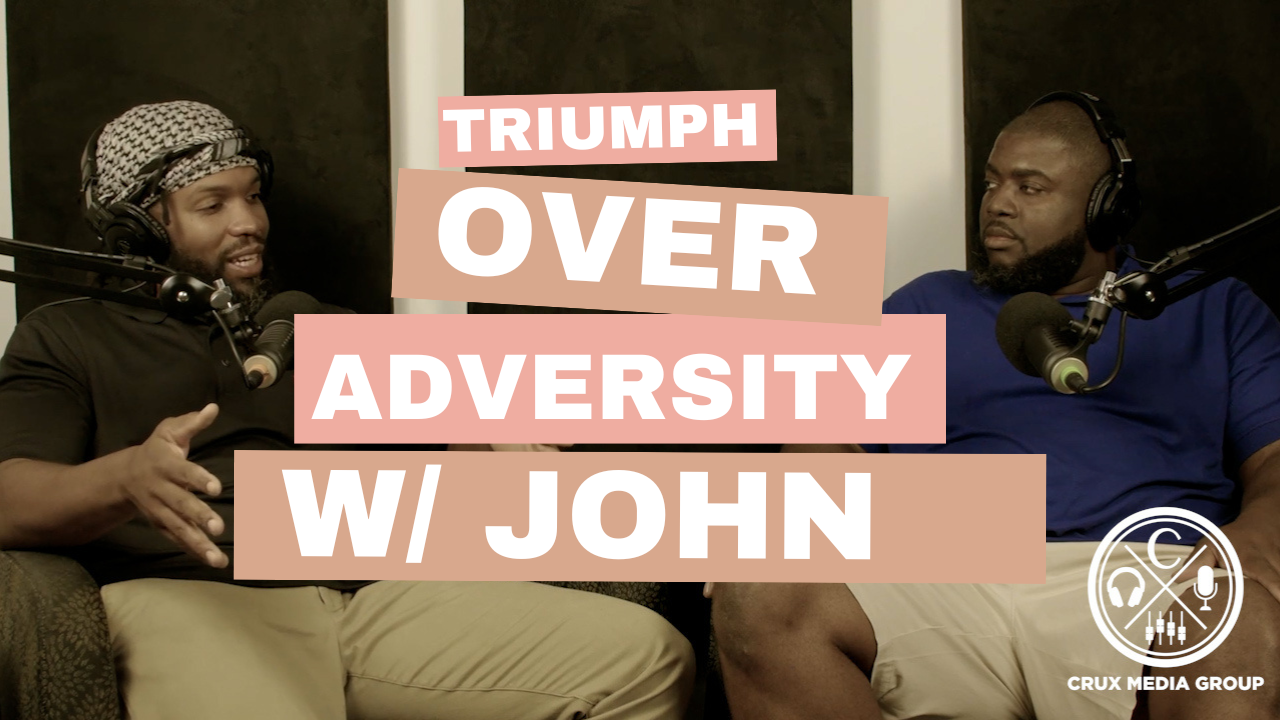
[00:01:02] Speaker B: Welcome to Philosophy talk show. I'm your host, Antoine Lod. And today is a special day, not only because I am in a space that I call home now.
I have a very special guest, a guest that I've known for years. I've been. We talk weekly. You know, he's inspired me. I told him he's more. He's like a. Like an angel walking the earth, you know, with the way that he speaks, his story, the things that he's been through, the ways that. The ways that he's able to inspire. You know, I'm not an easy person to inspire, you know, but this guy, he does something different for me, man. Mister John Williams.
[00:01:45] Speaker C: Thank you, thank you, thank you.
[00:01:46] Speaker B: My guy.
My guy, man. Thank you so much for coming, bro. Like, this is.
This is big for me, man. Like, we talked about this for like, two years. We were talking earlier, man. We've been talking about doing this for two years. And to actually see it manifest as something special. That's right. You here now, dawg.
[00:02:07] Speaker C: Oh, yeah. Oh, yeah. No, I appreciate you for having me on, man. I appreciate this as an honor. Good friend of mine, like a brother to me, known each other for over 20 something years. So this is good, man. I'm glad. Glad you were able to make the time come together.
So that's good, man.
[00:02:24] Speaker B: Yeah. So philosophy talks, man. What it's about is, I feel like everybody has their own philosophy, like their life philosophy, right? I wanted to be. I told myself one day I wanted to be a philosopher, but it seemed like it took too much to be a philosopher.
I was like, okay, well, philosophy. Because I got my own philosophy. So that's what philosophy talks is about, man. And this is just the talk show is about just giving people your philosophy, your life story, the things that you were able to overcome, and you man, like, you have a story that's kind of. Kind of. It's touching, and it's way different from any other story that I've been able to actually be a part of, for real. But we gonna start. We gonna start off from where you and I initially met. So we met. We both went to Wilson High School. You graduated in zero six, I graduated in zero seven. And we were able to create a brotherhood from being on the Wilson football team together.
But I think that there's a lot of that story that the world don't know, bro. Like, I feel like it's a lot of that story that made you who you are and made you able to overcome a lot of the things in your life that you were able to overcome.
Two years ago, you had a very tragic thing happen, and that's when we kind of reconnected. So we gonna start, man. Tell us a little bit about your journey from when we first met and how that helped you become the person and the warrior that you are today because you had a lung disease that you're overcoming for real.
[00:04:14] Speaker C: That's right.
[00:04:14] Speaker B: Right.
And we gonna get into all of that. So tell us about, like, your experience going through high school. You know, being in school, being at home, and, you know, dealing with the things that you had to deal with. Deal with and how you were such a monster on the field, bro.
[00:04:29] Speaker C: Oh, man. Yeah. So, for me, it's always been just going hard, going extremely hard and trying to overcome adversity.
It's been a lot of, you know, dealing with tough situations in life. You had tough situations, you know, at home, which a lot of you. A lot of you probably deal with. A lot of. A lot of kids, a lot of football players or athletes, period. Probably deal with just personal things at home. So, for me, it has been overcoming those obstacles from your home life, but also wanting to be great. So I've always wanted to be great. So, playing football in high school, I wanted to be great. I wanted to be the best thing, smoking as much as possible. I was very confident. Those of you who know me and we were able to play together or go against each other, you know, that I was very confident.
One thing people don't know about me is how hard I work. You may. You may have seen the work at practice, you may have seen the things, you know, just playing in the game and stuff like that, you know, film or just coming to the games. But I think people don't know how hard I. How hard I work on the. When I'm at home so, you know, that's it. So when I met you, Antwan, I met you in 2003. You were a freshman and I was a sophomore, and you never played JV, so the coach would not let you play JV because he called you the future. That was his nickname for you, the future, because you were top of the line, top Chef, and he didn't want anything to happen to you. So you were the future. And so that's kind of where we got started at, and we had a great chemistry together, so we were able to play with each other and make some great memories along with everybody else on our teams throughout the years. And we had some great teams and some great memories.
[00:06:28] Speaker B: Yeah. Yeah, for sure, man. I tell people this story all the time. We was playing Crestwood, I want to say we was playing Crestwood, and at the beginning of the game, it was on the sideline, and you was like, follow me. You get six touchdowns. So I think after my first touchdown, it was one of my uncles that was at the end of the gate, I ran to the gate, and he was like, how many you got for me? And I was like, six.
And he was like, every touchdown you get, I give you a certain amount of dollars, bro, in that game, I got six touchdowns, man. And, like that.
But that has even our conversations over the last couple years. Like, the things. The thing. The words that you say got a different type of meaning behind them. It's like they really do manifest themselves. So when you be saying stuff to me, I be like, all right, bro.
I believe it, man.
But then after high school, you went to Benedict College.
[00:07:31] Speaker C: I went to Benedict College for a year.
[00:07:33] Speaker B: And then you went to USC.
[00:07:34] Speaker C: Yep. And I transferred over to USC.
[00:07:36] Speaker B: So what was that like for you? Going from Benedict? Going from Wilson to Benedict? Benedict to USC.
What was that transition like for you?
[00:07:44] Speaker C: Yeah. So coming from Wilson High School, you know, purple and gold, the Tigers, you know, the atmosphere that we had at Wilson, it was a similar atmosphere at Benedict College because Benedict College is at HBCU, which was, you know, similar in nature to Wilson High School. I didn't really have a great experience at Benedict. I met a lot of great friends there, but I didn't have the greatest experience. I did one year there, and I transferred to USC, which is where I wanted to go anyway. I wanted to be at USC at that time. I wanted to be at USC. And USC was just different. USC had a different. It was just more culturally, it was more people. So you had more people and more people with different life experiences. So I was able to go there, and it expanded my mind. I was able to see stuff that I didn't grow up like that. I grew up in Florence, North Florence, and grew up in a different kind of way.
Parts of Florida, different parts of Florence. Not just North Florence, but grew up in a different kind of way.
And USC just opened my mind to so much more, so much more that I could become. And I had a great experience and a great time at the University of South Carolina, so it was great. And I know I say USC for folks that's listening in, not the Trojans, but USC, South Carolina gamecocks. The Gamecocks.
[00:09:06] Speaker B: Yeah. Okay. Yeah. So. And I had that same experience. I went to a similar experience. I went to Newberry, which was a PWI, and it was hard for me to adjust, right. You know, like, I going from.
I went to Lester, then went to Williams, then went to Wilson. So it was predominantly black people that I was always around, right. And then I went to Newberry. That was a predominantly white school, right, bro, I could not adjust, bro. Like, I couldn't. I was sitting in a room. I mean, kind of like, I am now super introverted, but sitting in a room and not. Not associate myself with anybody, so I couldn't get comfortable. It was like a culture shock that I couldn't adjust to being around a different race of people, so many at one time. So that was a hard adjustment for me. Then I went to Virginia State, which is HBCU, and it felt like Wilson, you know, it felt like I was home. So it's a similar thing there. But then football ended for me after that, you know? So with football being a huge part of your life and your relief, like, how was that? Cause it was hard for me, you know? So how was that when you.
You felt like it ended for you?
[00:10:27] Speaker C: Yeah. So playing in high school, I'm gonna go back a little bit. So playing in high school, I was one of the top players in the state. So my senior year, Allstate top South Carolina top 100, also played in the north south all star game as a left tackle and defensive end in the all star game. And football ended for me when I got to college. I never, never played a down in college, never was able to get on the field in college, and that was a very tough time for me. As a matter of fact, in 2007, I was at my first year at USC, and a lot of people don't know this. I was at my first year at the University of South Carolina, and a lot of people can relate to what I'm about to say. But there was a time when I didn't want to be here anymore. I wanted to kill myself.
I never came up with a way to do it. I never got that far. But it was just a time where I was just going through so much that I just didn't want to be here anymore. I cried a lot during that time because that's all I wanted to do. I just wanted to play football.
[00:11:32] Speaker B: So how, how did you escape that?
[00:11:36] Speaker C: Well, at the time, there was a, you know, University of South Carolina as part of the SEC Southeastern Conference, and at that time, there was a guy named Greg Sankey, who is the commissioner now of the Southeastern Conference. But I believe he was, he was working his way up at that time, and we reached out to him. Me, my mom reached out to him and wrote a letter. So they told us that in order to play, you have to try to get a waiver to play. And we wrote the letter, and he responded back and said, basically, you can't play because if we give you, if we grant you a waiver, then we have to grant everybody else a waiver. And so to me, I just needed something like that. I needed for somebody to say, hey, that's it. That's enough. And also, I was catching a hard time academically because I just wanted to play football. That's all I wanted to do. And I believe that that changed my mind enough as time went on. I call it this right here. So I look at it as a bus. So football was a bus that I got on, and I was able to ride that bus until it dropped me off when I was in college, it dropped me off where I needed to be. My mind wanted to go here because of football. I wanted to go to USC because of football, and it dropped me off there. But during the ride, it caused my mind to develop and get older and get more life experience, get a little more mature, and I started to make better decisions as I got older, but I just needed something to drive me towards that location. And the bus. The bus ride was. Was it, you know, football was it. It was. It was fun. It was fast, and that's where I needed to go.
But it was great, you know, it was great. It was great from there. But.
But once he told me I couldn't play anymore, it helped. It turned me into a student. You know, I just went to school. I became a student. Now, it was hard now with people telling you, they come to you and say, hey, you play football, you play football, and you got to keep telling the story over and over again about why you're not playing. So that's it?
[00:13:44] Speaker B: Yeah. All right, so at USC, you get to USC, and then you become an investigator, right?
[00:13:50] Speaker C: Yes.
[00:13:51] Speaker B: All right. So what was that experience like? And tell the world about the gift that you have, man, in that space of investigation, I guess.
What was that like?
[00:14:07] Speaker C: Well, so after I graduated from University of South Carolina, a few years later, a couple years later, actually, I applied to become a police officer at the University of South Carolina. So, you know, being a police, going through the academy, South Carolina academy, just like every other officer in the state of South Carolina went through the police academy. And I got hired on, and I started out on patrol. I stayed on patrol for a little while, maybe a year or so, I stayed on patrol, and that was after the academy and everything. I stayed on patrol for about a year or so, and then I got promoted to investigations, which is what you're talking about. And as an investigator and as a police officer, period, I was able to use my gift, and I say that, and I separate the two. So I'm going to separate the two.
My gift wasn't as a police officer. My gift was something that I was able to bring to policing. And my gift has always been talking to people. I love talking to people, and as you can see, I got a mouth, and I'll run it right now. I'm running it right now. So my gift has always been talking to people, and that's where I'm most comfortable. I'm most comfortable having those very difficult conversations. So as an investigator, when I got promoted as an investigator, I felt like I could interview anybody. I mean, anybody. I've never had anyone, anyone out of the entire time, and I don't know how many people I interviewed. I'm gonna put a number, and I'm gonna say 100. So out of 100 interviews, I've never had anybody say, let me speak to my lawyer. Like, they clam up. That's what we call climbing up. I never had anybody say, I wanna speak to my lawyer. Lower you it up. I never had that happen. Now you have people lie to you, and that's beautiful. Cause at least they're talking. So I've always been able to get information, gather information from people, whether they're. Whether you got a witness or, or, you know, you're just trying to get this information that pertains to your case from someone. I've always been able to get information. So talking to people has been my gift. I can talk to anybody, but that's. That's it.
[00:16:08] Speaker B: Yeah, man. And it definitely is a gift of yours, man. I always tell this man, and I'm gonna tell him again, like, you are an inspirational speaker, bro.
I'm gonna keep telling you, man. Cause you bring something. You bring stuff out of people, you know? You bring stuff out of me, you know, and it's not easy to do, so.
But.
How long were you an investigator?
[00:16:36] Speaker C: I was an investigator for almost three years. About three years.
[00:16:38] Speaker B: Three years. And what age is that? Did it when it ended?
[00:16:42] Speaker C: When I was in investigations, I was probably 29 or 30, maybe 30 years old.
[00:16:47] Speaker B: Okay. All right, so how did that end for you? Like, how did that stop?
[00:16:54] Speaker C: Okay. So I put in for a promotion, and my promotion was to become a sergeant over crime prevention and community relations, which was a beautiful position where on the University of South Carolina campus. I got a chance to go around and promote safety on campus and help, like, kind of come up with some safety initiatives and ideas for campus, along with everybody else in my unit that we had. We had a, you know, a great unit, and it went all the way to the top with. With folks that was trying to help in that matter. But, um, we go around and do a campus safety presentations. We set up tables with. With folks trying to promote safety on campus. We would, um.
We would, uh.
I did vip also. So what vip detail was, was you. You work with folks at university, like the president, the board of trustees, also, at the football games, I was tasked with taking around coach Ray Tanner, who's athletic director, who was the national championship coach for the University of South Carolina baseball team during the 2010 era between 2010 and 1213 ish.
And so I was tasked with taking him around during the football games. And so it was a great time, but it ended in a terrible way. Man.
[00:18:19] Speaker B: Talk about it, man.
[00:18:20] Speaker C: Oh, man.
Well, I'm taking deep breath.
So I'm on campus, I'm walking around, I'm doing my duties, and one day, I just get short of breath, and I can't figure out why. I'm just short of breath.
I'm out of it, man. I can't figure out why. And as you can see, I'm a larger guy, so I'm figuring, hey, you just out of shape, man. You. You're a big fella. Well, then I ended up getting sick. Came down with something like a sinus infection or cold or flu or whatever it was. It was something. Something very bad. And this was in September of 2019.
It was during the week of Alabama USC football game. And I just I mean, I wasn't feeling good, and I tried to push through like I always do try to push through, and I decided, man, I need to go to the doctor. And. And I go to the doctor and the doctor say, you're fine. Yeah, you fine. They checked me and said, man, you're fine. I don't see nothing wrong with you. And I just looked at him and said, man, something's wrong. Something has to be wrong. And this was a process that went on for a long time. For a long time. And mind you, this is 2019. And so doctor visit after doctor visit after doctor visit, going to the hospitals, different hospitals, getting like 2nd, third, and fourth opinions and come to find out I was sicker than I thought I was.
[00:19:42] Speaker B: Yeah. So what you, what was going on? Like, what happened? Well, I know what happened.
[00:19:49] Speaker C: Right.
[00:19:49] Speaker B: But I want the world to know, because when I saw you, I saw it on Facebook. I saw you on Facebook and you were, like, wired up with, like, the oxygen. Yeah. So. And I said, I said, you built different. You built different, something like that under the post. And from then, we started talking frequently after that. But the experiences that you had, bro, like, during that time was, I can't imagine because I'm 35 now, you know. So you was going through this at 31, 32.
[00:20:28] Speaker C: That's right.
[00:20:29] Speaker B: You know, you tell. You could tell the story better than I can. Yeah. Yeah.
[00:20:35] Speaker C: So during that time, like I said, I kept going to doctor after doctor.
I went to a local pulmonologist. That's where I ended up at. I went to a local pulmonologist, and they hooked me up to everything, like, did a pulmonary function test, which is, it's kind of like this microphone here where you sit up in this chair and you breathe into the machine. So you blow. They tell you to exhale, inhale, hold your breath. If anybody has ever gone through it, they know exactly what I'm talking about. It's a, it's a. It's a tough thing to go through this. And I remember.
I remember being in there and them telling me that your oxygen is very low. Your oxygen is so low. It was like 80 something percent oxygen. I think it was like 84%. And the doctor said, I don't even know how you function right now. You're probably just so used to it. But it was, it was very low, which is causing you a problem. And it could, it could, it could harm you. You could really do some harm. And so he did a CAT scan and everything where they took images of the inside of your lungs. And he got back to me, and when he got back to me, he said, you have something weird going on, and it's like sarcoidosis or something, but I don't know what it is. I've never seen it. So eventually, he took my CAT scans to a group of doctors, and he came back to me with some information and said, look, I don't know what it is that you have. I've never seen it before. They've never seen it before.
[00:22:03] Speaker B: That's crazy, bro.
[00:22:04] Speaker C: But you got to leave. You got to find you somewhere else to go. We can't help you here. We've never dealt with this. And I said, you know, nope. You know, nobody wants to be special, but I was a special case. And so he gave me a list of recommendations, which was Duke Medical center and also not musc.
It's one down in Florida, the Mayo Clinic. Sorry, is the Mayo clinic down in Florida. And I chose Duke University. And the reason why is because back in the day, my mom, she went there for some of her medical issues, so I thought it'd be a little more, like, familiar territory. And so I end up at Duke. And when I. When I first got there, the doctors there told me the same thing, that they'd never seen it before. They said that I had, like, a mosaic pattern on my lungs. It was difficult. I mean, there was things that I couldn't do. Like, I was. I was on oxygen. I had a hard time going up and down the stairs, so I couldn't. Couldn't do that. I couldn't. Man, there was so much stuff that I just couldn't do. I couldn't. I couldn't breathe. I mean, this just.
[00:23:06] Speaker B: At 32.
[00:23:07] Speaker C: At 32, I remember crying when they. When they put me on oxygen, I had to walk around with this big tank, and, you know, you feel like you're a young person.
Man, I had to walk around with this tank, man, I was crying in the hospital. I was crying walking around the floor.
[00:23:21] Speaker B: So what was it like walking around the hospital? Cause it's patients going through something similar in the hospital when you.
[00:23:30] Speaker C: Yeah, so at that time.
At that time, there was, you know, other patients going in there for, like, lung. Just different lung problems, like asthma and stuff like that. But the serious stuff didn't happen till a little bit later. So once Duke told me, hey, this is what we're going to have to do to figure out what you have going on. There's only one way. And they recommended that I do a lung biopsy and a lung biopsy is, well, I'll explain it to you on the day that I got the biopsy. So on the day I got the biopsy, great surgeon, by the way, a well known surgeon all over the world. Well known surgeon.
He bought me in the morning of. I had to be there at like 05:00 to get ready to get prepared for the surgery. And he bought me in. And so I'm explaining what they did by repeating what he said in so many ways. So he says, today, this is what we're going to do. And I say, okay, all right, Doc, and I'm getting dressed and everything. You know, you got to put your gown on and everything. You got to get prepared for the surgery. And he says, we're going to put you to sleep. We're going to collapse one of your lungs. We're going to put a hole in your side. And every time he talks, it's just like.
And he tells me, you're going to put a hole in my side, and they're going to do x, y, and z through that hole in my ribs. And I'm like, doc, I don't mean no harm, but you just do your job. You keep that to yourself. That's just too much from what I, you know, I was. I was ready before I went in there.
[00:25:03] Speaker B: Yeah.
[00:25:04] Speaker C: Yeah.
[00:25:05] Speaker B: Dang. Okay, you can keep going. Yeah.
[00:25:07] Speaker C: So what ended up happening is, you know, the surgery went great. They were able to get some pieces of my lungs off so that they could test it. But they sent me to the floor. ICU. They sent me to ICU. Were there other patients, like you mentioned, there are other patients who have heart problems. Like, they had a heart surgery, open heart surgery, or some kind of like a lung transplant. They had something very serious going on, and ICU tells it all. And so I'm in there, and it's the height of COVID So this is may of 2020. It's at the height of COVID So there's nobody else in there with you. So a patient can't bring anybody. No kind of support, no help, no nothing, nobody to sit with you, nobody to help ease your mind, nobody to just keep you, keep you, keep you going. Nobody. Nobody else in there. And so you're in there by yourself and about 20, but so once I got in there, they said, in about 20 minutes, you're going to get up and you're going to go walk. You're going to walk around this floor. So I said, okay.
Like, man, it's kind of quick. They're like, yeah, you're going to get up and walk. So they hooked oxygen up to me, and they had this big thing that you gotta walk and hold your arms on and just walk around the floor to just get a little exercise in. You open up your lungs a little bit. And I saw patients in there who were just, they were going through it. They were going through it, man. They had some stuff going on in there. And the whole time that I'm in the hospital, I'm like, woe is me. Like, why am I going through this? Like, I ain't hurt nobody. Not that I know of. A pretty decent person. I tried to help everybody. Why am I going through this? Why am I going through this? I remember being in the yard and putting my face on a tree because I'm like, why am I going through this? Lord, tell me something. And so I'm in the hospital, and I had the same attitude, like, why am I going through this? And I asked the nurse if I could walk around and try to talk to some of the people because there was nobody else in there to talk to, so. And I wanted to, you know, kind of talk to them and see how they were doing. And so she said, as long as, as long as they, they allow you to come in, so don't, don't just barge in anybody's room. They let you come in. So I went to this guy, and I, and I just remember it like it was yesterday. I went to this guy, and I'm trying to talk to him from the door. And so, you know, obviously, you know, you got to have a little louder, louder pitched voice. And I'm trying to talk to him, and he ain't putting much out. And I'm sitting there trying to figure out, like, what is he saying?
You seem like you're in some kind of pain. I can't figure out what it is. And then he tells me basically he had a double lung transplant. And I'm like, oh, man, I ain't.
[00:27:46] Speaker B: Even know that you can get lung transplants, yo.
[00:27:49] Speaker C: Yeah.
[00:27:49] Speaker B: Yeah. I ain't know that. Dang. Yeah. A double lung transplant.
[00:27:53] Speaker C: A double lung transplant.
[00:27:55] Speaker B: Go ahead.
[00:27:56] Speaker C: So I go around, I see another patient. They just had open heart surgery. And the nurses, they run in, they rush, and they start working on them. And I, uh, I get back to my room and I start crying because I'm like, man, I'm sitting here complaining about all the stuff that I'm going through, and there's somebody who's going through far worse than I'm going through, and I'm complaining, and it immediately changes, like, your perspective. I mean, it gives you a new lens on your camera. I mean, it really does.
[00:28:28] Speaker B: Yeah. And I can, I can, I think that's important for people to really understand, like, such a lesson in that, because it is always somebody going through way worse, like that will be willing to trade places with, you know, with what you're going through. And I can't imagine, like, it's hard for me to fathom dealing with this at such a young age, going, being a super athlete to, at 32, walking with oxygen on in the ICU, you know.
So from that time up until now, man, like, what has the life adjustments been for you? And like, how has, how have you been able to, like, overcome? Because you still have to keep up with what's going on with your body and stuff like that. Like, how have you been able to overcome such a huge obstacle or what some people might call a setback in life, you know, having to adjust from being an athlete to working the job where you're thriving to ending up with. What's the name of the lung disease?
[00:29:38] Speaker C: It's interstitial lung disease, but it's the official name of what I have is NSIP, which stands for a nonspecific interstitial pneumonia.
[00:29:48] Speaker B: So having to adjust to that, man, like, how, like, how do you daily, how do you motivate yourself to be who you are and be such an inspiration to every single person you talk to, bro, like, I would sit and watch and listen to you talk to just random people. One of the first questions you be asking, you be like, who your people?
Who your people? And you usually know exactly who somebody.
And I know they leave feeling different from meeting you. But how, though, like, how can you go be going through something and able to inspire others at the same time?
[00:30:27] Speaker C: Yeah, I think you mentioned it. So it's always thinking about others.
So once that happened to me, it's like I gotta change my trajectory now. I gotta change the way I think about things. I gotta change the way I see things. And so me is I'm always, I want to be the person who goes through something and overcomes it. That's who I want to be. And for me to overcome it, I want to inspire others to overcome it as well. So the things that they have going on, so everybody is struggling with just different things in their lives, and I want to be the person that helps. I just want to help. I want to extend a word some, you know, at some point in your life, at some point in your day, I want to extend the word, because sometimes you may be having a bad day. It's not that you're a bad person. You just may be having a bad day. So I want to kind of talk to you and be personable. That's. That's been my, my thing. Just always staying positive. Like, I. I have to be the most positive person in the room. I gotta be. I gotta be. In order for me to go, I got. I gotta be. And I land a lot on my faith, my faith in the Lord, my faith in God, my faith in Jesus Christ. You know, I lend everything to that. So I got to give God all the praise and all the glory. I couldn't sit. I couldn't sit here without him. I had to give him all the praise and all the glory.
[00:31:45] Speaker B: Yeah, man. So what is life about to you at this point in your life?
[00:31:51] Speaker C: Well, life is all about people. Life is all about people being able to progress. So, like I just said, you know, my life is going to be a sacrifice. That's how I feel. My life is gonna be a sacrifice. I'm gonna go through some things in life, but I'm gonna use it to help others. So life is about people. My family, my wife, my daughter. I got a newborn. She'll be eight months this week.
My mother, my father, my sisters, just my family, my friends, you. That's what life is about. It's not about me anymore. At a certain point, it was a little bit about me, but now it's not about me anymore. It's about everybody else. I want to see. I want to see for years to come. I want to. I want. I want this, what we're talking about right here. I want. I want it to outlive me. I want it. I want these words to come true where they outlive me and they become bigger than what even what we're doing right now. I want it to become, like, so much bigger, and we're going to continue to work on things, but that's what keeps me going. It's just the progression of life.
[00:32:55] Speaker B: Yeah. Okay. That's, man, that's what's up, the progression of life. Because I'm a. I'm big into becoming and growth and stuff like that. Like that. So that progression of life, man, like, as long as you hear, you should attempt at least to be progressive, you know, in it. Okay, so what is, like, when it's all said and done, when it's all over and you turn back into dust, right? What is it that you want to be said about you.
[00:33:25] Speaker C: Well, I want it to be said that I was a great person. So I'm already dust. So I want it to be where it says that this was a great person. This was a great man. This was a man of God. This was a great husband, a great father, the most helpful person. That's what I wanted to be said.
There was a situation that happened when I was at. At the University of South Carolina, and this is going to tie into what I was saying, but I was at the University of South Carolina working at the police department when I got sick, right? And so they put me out on leave FMLA, if anybody's familiar with that, they put me out on FMLA, but afterwards, they fired me.
They fired me. And with everything that you got going on, I lend it to the Lord with everything that you got going on. So they fired me. And you're a wounded animal. So when you wound it, you're wounded. You can't go out there and get food like you used to. So it was very tough. And so I filed a complaint. Obviously, I filed a complaint, and the guy who was doing my investigation for the complaint, and I know I'm saying a lot, but I don't, you know, I don't hide anything. So we're just talking. So the guy who was doing my investigation, he asked me, who can I talk to in the police department that could, you know, basically say whatever? And I said, it doesn't matter. You can go talk to anybody. So on my tombstone, I wanted to be known that I was a good person. I was this person, and I don't have to have a select group of people to say, this is who he was. Anybody who comes in, contact me, with me, I want them to know who I am and who I was.
That's anybody.
[00:35:19] Speaker B: I can attest to that, man. Like, I put you in top five people, you know, that I've been able to, just as far as your.
How genuine you are, how authentic you are, you won't be holding nothing back.
You believe in telling it how it is, and that attracts me. Anybody. Like, I love the fact that you say what you gotta say, you know, even from high school, you know, you were saying what nobody else would say.
[00:35:52] Speaker C: Right.
[00:35:52] Speaker B: You know, so you always been that person, bro. And I don't know anybody who could argue that, you know? So I definitely feel like you living what it is that you will want to be said about you when you're not here no more, bro. You know, and that's big to me, to be able to sit beside somebody that's actually that I'm close to, you know, and that actually living his life mission.
[00:36:23] Speaker C: Right.
[00:36:24] Speaker B: So that. That. That's huge for me, man. So I thank you for being who you are. You know, I telling you this all the time, man. You a very special human being on this earth. You got a gift that the world needs to be able to experience, bro. Like, you.
You have a group of people who need you. You know what I'm saying? Like, outside of your family, they just need your words, they need your energy. They need what I feel like a part of the reason why you was put on this earth, you know what I'm saying? To be able to move them or show them. I think the things that you went through, I know that the things that you went through and probably still gonna go through and going through makes a better story for you. You know, it just. Those hard times makes it the story so much more relatable because everybody goes through, but the way that you growing through yours, bro, one day with his lung disease, one day I called him, and this man was cutting down trees.
[00:37:28] Speaker C: Yes.
[00:37:28] Speaker B: In his backyard, bro.
[00:37:30] Speaker C: Yes.
[00:37:30] Speaker B: Like, so what makes you even think of doing the things that you be doing with everything that you got going on, man? Like, how is it possible? I know you said you do the Daniel Faz. That's changed things. The story about the hole in your heart, bro.
[00:37:48] Speaker C: Yes.
[00:37:49] Speaker B: Like, please give us that story before we go, man. Cause that was amazing to me.
[00:37:54] Speaker C: Yeah. So, like I said, man, I give it all to God. So one day, it's about seven months ago now, I went to the doctor, and they told me that I had a hole in my heart. And I'm like. And I've heard of it before, but not me, you know, hole in my heart.
[00:38:11] Speaker B: Like, what?
[00:38:12] Speaker C: And you just drop it off like that? Just drop it off and leave it. So they told me I had a hole in my heart, but the doctor said, we're gonna have to go in and check on this hole. We had to go in and check. So it was a small procedure where they put you to sleep, and they go through your esophagus, your mouth. They go through your mouth, and then they put a camera down there to see if you have a hole in your heart. And, you know, I had been through so much at the time, and God has pulled me through so much that I wasn't worried. Now, when they first told me I was a. I was bothered by it because it was like, all right, this is one more thing. But I wasn't worried about what the outcome was going to be because I knew God was going to take care of it. And when they went in, he put me to sleep. I'm laughing and joking the whole time before I went to sleep, like I always do. I like playing with the nurses, just laughing and joking with them. And I went to sleep and the doctor woke me up and said, mister Williams, there's no hole in your heart. And I said, yeah, I know. I already know. It's already happened so many times through this, through this, this last five years, I already know the Lord is working it out, man.
[00:39:20] Speaker B: That's, that's crazy, man. And there's been so many instances where it's just that since I've been around, where is this?
You overcome? That's why I say you are superhuman, bro. You not a, you not an average being on this earth, man. But I do appreciate your presence, man. But before we go, give the people something to encourage or inspire or to motivate them further through whatever it is that they might be growing through.
Give the people a piece of who you are, man, before we get out of here.
[00:39:57] Speaker C: Okay? So the biggest thing in life is always staying positive, staying motivated, wake up with something, put, you know, put something on your schedule, put something on your agenda. You know, you always got to wake up with, with something on your mind, something. And a lot of this, I'm going to tell you, Antoine, I get it from you. So a lot of this I watch you do on a daily, you always going, you always, you always, you know, into something. You're always busy, busy with things. So, so my thing is always have something going on, whether it, like, right now, I have a garden.
[00:40:29] Speaker B: Yeah.
[00:40:29] Speaker C: So I'm growing vegetables and everything and putting stuff together. Me and my wife, we love going to look at flowers and trees and plants and stuff like that. And we got a garden growing. We got so much stuff out in the yard. We got apple trees, peach trees, blueberries.
[00:40:46] Speaker B: I know where I'm going. If something happened, your backyard.
[00:40:49] Speaker C: Oh, yeah. And so the key to it is just staying positive, man, staying motivated, you know, having, having faith that everything gonna be all right. That's it.
[00:41:04] Speaker B: Thank you so much, bro. Like, I appreciate it. If there's anything that you got on your heart, you can let it out now.
And other than that, bro, thank you so much, man.
[00:41:13] Speaker C: Yeah, man, I appreciate you.
[00:41:14] Speaker B: This, this, this has been something that I've been wanting for the longest, bro, and, and you, you made it happen.
[00:41:20] Speaker C: Yeah.
[00:41:21] Speaker B: So I'm grateful for it.
[00:41:22] Speaker C: No, you the man. I tell you, man, I definitely appreciate you. I appreciate you having me on, and I appreciate all our conversations, everything that's to come to, because this ain't the end. So everything that's to come for the future, I really appreciate it.
[00:41:36] Speaker B: Yeah, for sure. Yeah, man. I want to thank everybody that tapped into philosophy talk show today. My host, well, my guest, Mister John Williams. Man, he came, he did exactly what I felt he would do. You know, he was able to spark something in me. So I'm sure he was able to spark something in y'all, just from his story and him being able to overcome.
And y'all just, I wanna say personal to say, just keep it. Keep it growing, you know, like, if you here, if you living, if you get to experience life, you actually get get to experience life, good or bad, because that's what life is, you know, it's going to be ups and downs, mountains and valleys. Like, that's how life is. But you able to experience it. So make the best of the now, because that's all that exists. And until the next time, I, Antwan lad, will see you again. Peace.
I.